Tuesday, April 1, 2014

Escape from Mr. Lemoncello's Library


http://www.chrisgrabenstein.com/kids/images/lemoncellos-library-300h.jpg


Grabenstein, Chris. Escape from Mr. Lemoncello's library. New York: Random House, 2013. Print.

ISBN:   978-0-375-87089-7

Audience: Ages 9-12, Grade 4-6

Summary: Kyle Keeley is the class clown and a lover of all kind of games.  The gamemaker Luigi Lemoncello is his idol. So when Kyle finds out that Lemoncello is the brains behind the new town library he eagerly applies to win a spot to be one of the first 12 kids in the library. Kyle wins, and gets to spend the night for a sleepover full of gaming. But when morning comes, the kids are locked in and they must solve the secret mystery in order to find the way out. 
Strengths:  This creative book is homage to libraries and books. It is full of creative puzzles and word play and references many famous novels and authors. The adventure is accessible and many kids will want to play along.

Weaknesses:  At times, the references are a bit dated, and the authors and books might not be ones that kids would easily recognize. The characters are flat and a bit stereotypical – I would have liked to see some growth in them over the course of the story.

Uses:  With all of the puzzles and word play, this book is perfect for teaching inference (CCSS ELA: RL.1 Grades 4-6). There is a great deal of figurative language to read and interpret as well (CCSS ELA:L.5 Grades 1-6). The story elements would be easy to identify (CCSS ELA: RL.5 Grades 2-5).

Read-alikes:
·      Charlie & the Chocolate Factory -   Roald Dahl (story of a boy who goes into a wacky world)
·      The Westing Game – Ellen Raskin (mystery story where the residents of an apartment building try and solve a puzzle to win a large inheritance)
·      A Night at the Museum (movie) – (movie where the characters are stuck overnight in a museum)
·      Chasing Vermeer – Blue Balliett (art mystery where kids try and to solve clues to recover stolen paintings)
·      The Mixed-up Files of Mrs. Basil E. Frankweiler – E.L. Koningsberg (two runaways hide in a museum and discover a mystery)

Awards: 
·      ALSC Notable
·      Cybils Finalist
·      Parents Magazine Best Book
·      NYT Best Seller
·      Bank Street College Best Book
·      Washington Post Best Book

Other:   Starred reviews from Kirkus, Booklist, and Shelf Awareness

Resources for Librarians & Teachers:

Flora & Ulysses


http://www.gannett-cdn.com/-mm-/0c9109c71ea0524d9fe840f91fabd67bb94a26a9/r=537&c=0-0-534-712/local/-/media/USATODAY/USATODAY/2013/01/24/flora_cvr_usatoday_rev-3_4.jpg

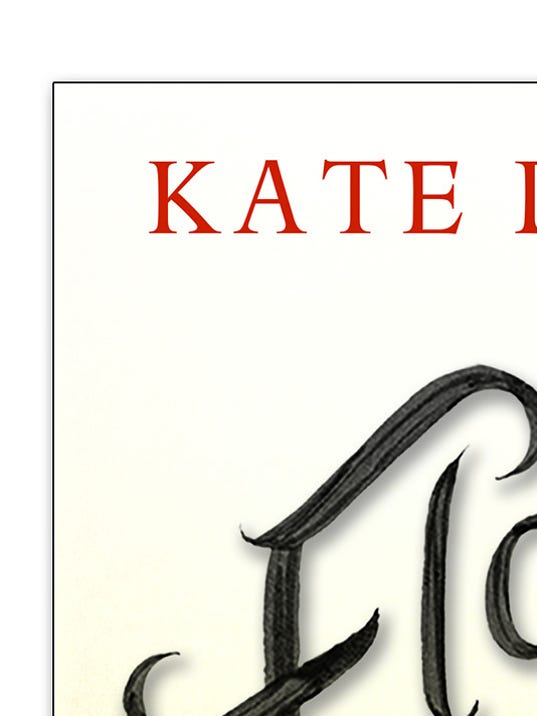
DiCamillo, Kate, and K. G. Campbell. Flora & Ulysses: the illuminated adventures. Somerville, Mass: Candlewick Press, 2013. Print.

ISBN: 076366040X

Audience: Ages 8-12, Grade 3-6

Summary: Flora Belle Buckman loves comic books and superheroes, but she doesn’t believe much in happy endings. When a squirrel is accidently vacuumed up by her neighbor, Flora steps in and rescues it with amazing consequences. The squirrel has super powers – Ulysses is strong, can fly, and writes poetry! Flora helps protect Ulysses from his nemesis, experiences some amazing adventures, and discovers hope for her world along the way.  

Strengths:  There are some laugh out loud funny parts to this story and the amazing illustrations would appeal to comic book lovers. The message is an endearing one of hope, and DiCamillo has created some unforgettable characters.

Weaknesses:  At times, the book could become too quirky for some readers. The parents’ decision to kill the squirrel could be upsetting to kids who are animal lovers. I find it difficult to pinpoint a good reading level for this book – while the illustrations and style would most appeal to a younger reader, the vocabulary is often very advanced and would be most appropriate for an older one. I think it would be an excellent read aloud or a recommendation for an advanced younger reader.

Uses:  The characters in this book are quirky and memorable and would easily lend themselves to a character study (CCSS ELA:RL.3 Grades K-6). The vocabulary is advanced (CCSS ELA:L.4 Grades 3-5) and the writing style is unique (CCSS ELA:W.3 Grades K-6). The poetry could be used to study poetic style (CCSS ELA:RL.10  Grades 1-6). An art teacher could use this as an example of illustration and cartoon.

Read-alikes:
·      Mercy Watson – Kate DiCamillo (From the same author, the book series about a pet pig who loves cars, trick or treating, and especially toast.)
·      Lulu and the Brontosaurus and Lulu Walks the Dogs- Judith Viorst (Feisty heroine Lulu is determined to get what she wants. Illustrated novel.)
·      Diary of a Wimpy Kid – Jeff Kinney (Illustrated novel series about a boy’s trials in school.)
·      Clementine- Sara Pennypacker (Illustrated novel series about a girl who is always into some kind of mischief.)

Awards: 
Newbery Medal
Parents’ Choice Gold
Publisher’s Weekly Best Books
Texas Bluebonnet Award

Other:  Starred reviews in Kirkus, Booklist, School Library Journal, and Publisher’s Weekly

Resources for Librarians & Teachers:

Freaky Fast Frankie Joe


 http://d202m5krfqbpi5.cloudfront.net/books/1333220336l/13551662.jpg
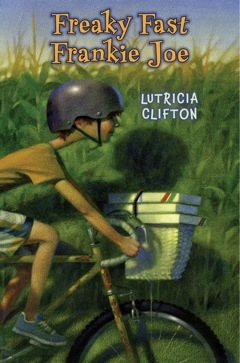
Clifton, Lutricia. Freaky Fast Frankie Joe. New York: Holiday House, 2012. Print.

ISBN:  978-0823428670

Audience: Ages 8-12, Grade 3-6

Summary: Frankie Joe Huckaby lives with his mother in Texas, until her cheating ways catch up with her and she ends up in jail. Suddenly Frankie has to go live in Illinois with his mostly absent father, an unknown stepmother, and four sneaky half-brothers. Determined to get back to his trailer park home, he starts a delivery service with his old bike and some local clients to try and save money for the long trip. But as he starts to become part of the rural community and realizes that maybe his mother isn’t what he thought, he is faced with the challenge of figuring out where he really belongs. 

Strengths:  The characters in this book are unforgettable and well drawn. The kids are very believable, especially the “villain” in Frankie’s oldest brother. The members of the community are quirky but they never cross over to silly. The story contains a lot of situations that kids could identify with – divorce, siblings, working, and disappointment.

Weaknesses:  Some parents could have problems with kids reading about Frankie’s mother – who is neglectful and ends up in jail. Frankie is allowed to skip school and has no supervision when he is in her care. Also, there are a few questionable choices in what pop culture is included that could date the story.

Uses:   This book would be excellent for discussing literary structure since it has a strong problem/solution arc (CCSS ELA: RL.5 Grades 2-5). Themes in the book include dealing with divorce, siblings, and disappointment  (CCSS ELA: RL.2 Grades K-6). The characters are well written in this story and would be good ones for a character study (CCSS ELA:RL.3 Grades K-6).  This book is perfectly suited to put in the hands of reluctant readers, especially boys.

Read-alikes:
·      The Great Gilly Hopkins -  Katherine Paterson (the Newbery honor award book about a girl in foster care)
·      The Pinballs – Betsy Byars (three foster children who’ve been taken in by the same family)
·      Joey Pigza- Jack Gantos (series about a boy with ADHD, similar main character)
·      Three Times Lucky – Sheila Turnage (mystery story with a similar small town setting)

Awards: 
IRA Children’s Choice Award
Texas Bluebonnet Award
SC Children’s Book Award
Nebraska Golden Sower Award

Other:  Starred review in Kirkus

Resources for Librarians & Teachers:
 Educator’s Guide: http://www.holidayhouse.com/docs/Freaky_Fast_Frankie_Joe.pdf

Saturday, March 22, 2014

The King of Little Things


 https://blogger.googleusercontent.com/img/b/R29vZ2xl/AVvXsEiAoQaFvbo5-U6_By2rqaYaf_BZ2QPrue2-wv1MOzvfQBxIWgKMLWrYsIXYmnH-SR1WF4gdk42D1NLfFYoK4s8IVxEIlPMlKTB-K415jcLssbktoA232dwutK8696Uq69kLMZUSLb6JHic/s1600/King.JPG

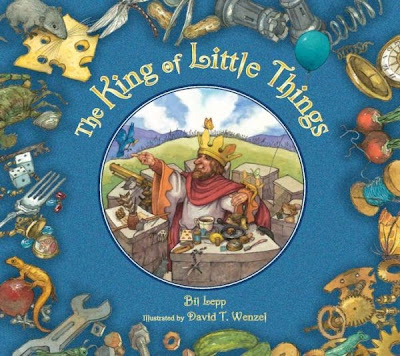
Lepp, Bil, and David Wenzel. The King of Little Things. Atlanta: Peachtree, 2013. Print.

 ISBN:   978-1-56145-708-3

Audience: Ages 4-8, Grade PK-3

Summary:  In this original fairy tale, King Normous wants to be the Ruler of All the World and only the King of Little Things stands in the way of his plans. However, when he attacks the Little Kingdom the king, who “has all he needs and doesn’t need more,” doesn’t back down. His loyal subjects back him by fighting back and then continue to support him even after he is imprisoned. When the little things strike against him, King Normous realizes that little things do matter after all.

Strengths:  This book introduces unfamiliar vocabulary in a way that makes it accessible and fun. Lepp is also a master of figurative language, who manages to weave in alliteration, metaphors, similes, and rhythm without ever losing the narrative storyline. Wenzel’s illustrations include amazing detail and highlight the humor in Lepp’s tale. This book is a joy to read!

Weaknesses: I feel the recommended ages for this book should be expanded. While it would be appropriate for younger grades as a read aloud or a genre example, it could easily be used in the upper elementary grades for an exemplar text. The language is masterful and much of the vocabulary is grade-level appropriate for older students.

Uses:  This book would work well for a genre story on fairy tales and fables (CCSS ELA:RL.2 Grades 2- 4) or a discussion of themes (CCSS ELA: RL.2 Grades K-6). The expressive language and vocabulary would make it a perfect mentor text for writing (CCSS ELA:L.4 Grades 3-5 and CCSS ELA:W.3 Grades K-6) as well as one to take apart for an in-depth study of figurative language (CCSS ELA:L.5 Grades 1-6).

Read-alikes:
  • The Three Pigs -   David Wiesner (Wiesner’s unique take on the traditional tale)
  • The Lion & the Mouse- Jerry Pinkney (A familiar story with a similar theme)  
  • The Once Upon a Time Map Book- B.G. Hennessey (Detailed maps of fairy tale lands.)    
  • The Teacher in the Patriotic Bathing Suit – Bil Lepp   (Audio recording of the author telling stories.)

Awards: 
Parent’s Choice Gold
Bank Street Best Books finalist

Other:  Starred review in Kirkus

A Home for Mr. Emerson

 
 https://d202m5krfqbpi5.cloudfront.net/books/1384382708l/18197478.jpg

Kerley, Barbara, and Ed Fotheringham. A home for Mr. Emerson. New York: Scholastic Press, 2014. Print.
ISBN:  978-0-545-35088-4

Audience: Ages 8-12, Grade 3-7

Summary:  This picturebook biography focuses on the early life of Ralph Waldo Emerson as he grew up in the city of Boston, Massachusetts. While he was raised a city boy, he dreamed of a life in the country. Eventually, he moved to Concord to raise his family and became an integral part of the small town life. When Emerson was 69 years old his home was destroyed by fire and he traveled in order to recover from the trauma. When he returned, the people of Concord had rebuilt and restored his beloved home. Emerson is brought to life through many colorful, warm illustrations that fill the pages in this oversized book.

Strengths: Emerson’s life story is told in a very accessible style with kid-friendly vocabulary. From the front cover with the oversize flying book, he is shown as a larger than life figure who loves reading and writing. The large hand-drawn illustrations and bright color palette invite the reader into his world. The text is full of quotes from Mr. Emerson’s writing which are set apart from the rest of the story through changes in font and color. The endpapers also illustrate some of his famous sayings. The book also contains an Author’s Note with a photograph of Emerson, an activity page that encourages students to think about some of his quotations, a list of primary sources, and source notes for the quotations.

Weaknesses:  The book does not really go into the reason why Emerson is a famous figure in American literature or anything about his early life before he moved to Concord. A student who comes to this book without knowing anything about Emerson would need other sources to get a complete view.

Uses: This well-written biography would be a good resource for younger students to write research reports (CCSS ELA: W.7 Grades K-6), and to introduce the idea of primary sources through the quotations included in the text (CCSS ELA:RI.3 Grades 2-6). It would also serve as an example of how to include quotations in a report (CCSS ELA:W.2b Grades 4-6). Obviously, biography is an excellent way to talk about character as well (CCSS ELA:RL.3 Grades K-6). Art teachers could use the bright spreads to talk about color, especially warm versus cool colors.

Read-alikes:
·      The Extraordinary Mark Twain – Barbara Kerley (Written by the same author, the biography of the writer Mark Twain.)
·      Electric Ben- Robert Byrd (Picture book biography of Ben Franklin that also includes many quotations)
·      Wonder – R.J. Palacio (A novel that includes the idea of quotations through Mr. Browne’s precepts.)
·      Mermaid Queen – Shana Corey (Beautiful picture book biography by the same illustrator.)
·      Father, We Thank You – Ralph Waldo Emerson (An illustrated picture book version of one of Emerson’s poems.)

Other:  Starred review in Publisher’s Weekly

Resources for Librarians & Teachers:
Journey


 http://www.indyweek.com/binary/81b1/1388557962-journey_cover.jpg


Becker, Aaron. Journey. Somerville, Massachusetts: Candlewick Press, 2013. Print. 
ISBN:  0763660531
Audience: Ages 4-8, Grade PK-3

Summary: In this wordless picture book, a young girl tries to get her busy family to interact with her. The beginning spreads are dull with a almost colorless palette, broken only by a few touches of color created by the girl’s red crayon. When she fails, she uses her crayon to draw a door on her bedroom wall and goes through it into another magical world. The palette turns green and blue and the pages explode with light. Everything the girl draws magically becomes solid, and she explores the new world with the help of the transportation (boat, balloon, carpet, bicycle) that she creates. When an evil king captures her, a mysterious purple bird appears, and she follows it to a satisfying escape and solution to her loneliness.

Strengths: This wildly creative book would encourage any child to use their imagination – I think they would immediately be drawn into dreaming up new adventures for the main character. The wonderfully illustrated book is a feast for the eyes. The spreads are gorgeous and full of detail that made me want to stare at it for hours. That Becker was able to create such detailed illustrations with pen and ink and watercolor is truly amazing.

Weaknesses: At times, students can be frustrated by wordless books and feel that they are too “babyish.” They are a hard sell to teachers, as well, who often don’t know how to effectively use a book that they can’t use as a traditional read aloud.

Uses: A wordless book can be used to develop students’ ability to notice key details (Common Core State Standard ELA:RL.1 Grades K-3) by discussing what they see as they “read” the story and then transferring these details to writing their own narratives (CCSS ELA:W.3 Grades K-4). It also is a perfect venue for retelling of a story (CCSS ELA: RL.2 Grades K-2) and identifying literary structure (CCSS ELA: RL.5 Grades 2-5). An Art teacher could also use this book to discuss technique and color palette. Themes (CCSS ELA: RL.2 Grades K-6) include loneliness, adventure, and creativity. Finally, this book would be a great one to put in the hands of an ESL student or a reluctant reader who could understand the story.

Read-alikes:
·      Harold & the Purple Crayon - Crockett Johnson (The classic story of a boy who uses a purple crayon to draw things that come to life.)
·      Castle- David Macaulay (Intricate illustrations of castles)
·      hello! hello! – Matthew Cordell (The family is too busy to spend time with their daughter because of their digital devices.)
·      Blackout- John Rocco (The family is too busy to spend time together until a blackout hits the city.)
·      The Red Balloon   - (The classic Academy Award winning 1956 film of a boy who follows a red balloon through Paris.)

Awards: 
Caldecott Honor
Amazon Best Books
NYT Best Illustrated
Junior Library Guild

Other:  Starred reviews in Kirkus, Booklist, School Library Journal,  & Publisher’s Weekly, featured on Calling Caldecott

Resources for Librarians & Teachers:
Book Trailer: http://www.youtube.com/watch?v=SxUs41jB4Ts

Friday, August 2, 2013

My Great Aunt Arizona

MY GREAT-AUNT ARIZONA by Gloria Houston


Author: Gloria Houston
Illustrator:   Susan Condie Lamb
Publisher:  Harper Collins
Publication Year:   1992
Location: Personal Collection

Awards:   ALA Notable, IRA/CBC Childrens' & Teachers' Choice, NCSS notable, NCTE notable

Summary:  My favorite book to introduce text connections to my students, this is the autobiographical story of Houston's great aunt. Arizona grew up in the mountains and overcome odds to become a teacher in a one room school house. Although she dreamed of traveling, she never did but instead visiting those places in her mind and through the students whose lives she touched. The watercolors are perfect illustrations of a time unfamiliar to most modern students and invite them to pour over the details.

Classroom Ideas: A wonderful mentor text for describing someone in a student's life that inspired them and for making text connections. A good historical connection as well.

Extras:

All the Places to Love

 ALL THE PLACES TO LOVE by Patricia MacLachlan

Author: Patricia MacLachlan
Illustrator:   Mike Wimmer
Publisher:  Harper Collins
Publication Year:   1994
Location: Personal Collection

Awards:   IRA/CBC Teachers' Choice, NCTE Notable, NCSS Notable Social Studies

Summary:  Beginning when his grandmother wraps him``in a blanket made from the wool of her sheep,'' Eli describes his grandparents' and parents' joy in him and his in their farm, where all their names are carved on a barn rafter. As he grows up, he tells about the farm and all the places that he grows to love. The book ends as he plans to share favorite places with a new baby sister.

Classroom Ideas: A mentor book that would encourage kids to think about the places in their lives and to include descriptive details.

Crow Call

CROW CALL by Lois Lowry

Author: Lois Lowry
Illustrator:   Bagram Ibatoulline
Publisher:  Scholastic
Publication Year:   2009
Location: Knox County Public Library- Lawson McGhee

Awards:   Booklist starred review

Summary: (An autobiographical story)  Liz's father has just returned from war and he is a stranger to her. The two set off on a morning together, sharing breakfast of cherry pie at the diner and then heading out into the woods to hunt. They talk about the war and then Liz calls dozens of crows into the trees. Liz's joy in the crows is evident and her father decides not to hunt them that morning after all as the two head back down the hill hand in hand. A sweet book of the relationship between father and daughter.

Classroom Ideas: The description in this book is amazing: "Grass, frozen after its summer softness, crunches under our feet: the air is sharp and supremely clear, free from the floating pollens of summer; and our words seem etched and breakable on the brittle stillness." The setting is shown through the details in the illustrations- the signs in the diner, haircuts, and the car they drive; but the book would be relevant for any child whose parent has served in the military.


Extras: Author's note with a photograph of Lois Lowry from that time period.

You're All My Favorites

YOU’RE ALL MY FAVORITES by Sam McBratney


Author: Sam McBratney
Illustrator:   Anita Jeram
Publisher:  Candlewick Press
Publication Year:   2004
Location: Personal Collection of MAH

Awards:  Bank Street College Best Book, Oppenheim Platinum

Summary:  When three cubs want to know who is their parents' favorites, they are reassured that they are all the favorites in their own special way. The most perfect first, second, and third cubs respectively. A sweet story that addresses a common childhood anxiety. The illustrations are charming pencil and watercolor.

Classroom Ideas: This book would be perfect for storytime for younger students. The story is cumulative and the characters are sweet.

Wilfrid Gordon McDonald Partridge

Wilfrid Gordon McDonald Partridge

 Author: Mem Fox
Illustrator: Julie Vivas
Publisher:  Kane/Miller
Publication Year:   1985
Location: Knox County Public Library- Lawson McGhee

Awards:   Children's Book of the Year by the Child Study Association of America, ALA Notable, NYT 100 Best Children's Books 

Summary:  A boy named Wilfrid hears his parents talking about the memory loss of a ninety-six year old neighbor who lives next door in the old people's home. He tries to discover the meaning of "memory" by asking the other residents who tell him, respectively, it's something warm, something sad, something that makes you laugh, something precious as gold.He gathers his own "memories" to bring to Miss Nancy, his favorite neighbor because she, too, has four names. Each of his treasures, a freshly laid egg for warmth, a toy puppet for laughter, his grandfather's war medal for sorrow, and his precious football brings back memories for Miss Nancy Alison Delacourt Cooper and smiles for the two of them. Sweet watercolors illustrate the poignant story.

Classroom Ideas: This is a semi-autobiographical story which could lead children to their own stories of things that are precious to them and bring back memories. It could also be linked to Alzheimers and aging and used by a school counselor.

Extras: The story behind the story on Fox's web page:
http://www.memfox.com/wilfrid-gordon-mcdonald-partridge.html

Thursday, August 1, 2013

Phoebe and Digger

PHOEBE & DIGGER by Trisha Springstubb

Author: Tricia Springstubb
Illustrator:   Jeff Newman
Publisher:  Candlewick Press
Publication Year:   2013
Location: Knox County Public Library- Lawson McGhee

Awards:   featured in CCYAL Best of the Best 2013

Summary:  When Mama got a new baby, Phoebe got a new digger. At the park, Mama & the baby sit on a bench while Phoebe & Digger play in the dirt. A big mean girl comes and steals Digger even though Phoebe uses her words to ask for Digger back. Phoebe begins to feel a cry coming but Mama makes the mean girl give Digger back and Phoebe realizes Mama is still there for her too.

Classroom Ideas: A wonderful addition of a strong female character who wears red & green and plays with a digger. There is the idea of problem solving and the reassurance that mothers have enough love for all their children.

My Father's Arms are a Boat

MY FATHER'S ARMS ARE A BOAT by Stein Erik Lunde

Author: Stein Erik Lunde
Illustrator:   Oyvind Torseter
Publisher:  Enchanted Lion Books
Publication Year:   2013
Location: Knox County Public Library- Lawson McGhee

Awards:   Norwegian Ministry’s Culture Prize for the Best Book and “Most Beautiful Book Award” for best picture book, Kirkus starred review

Summary:  A boy can't sleep and goes to sit on his father's lap. The two discussion the trees and birds in the forest and then that the boy's mommy will never wake up. The two go outside into the night for a while and then return inside where the man reassures the boy that "everything will be all right." "Are you sure?" "I'm sure." The subject is addressed in a straight forward way with no melodrama and shows the loneliness of both characters. The mixed-media illustrations are strange, but realistic. Kirkus describes them better than I can: "They seem grounded in reality, yet they are dreamlike, giving the impression one has been privileged to see someone else’s memory. A breathtaking masterpiece."

Classroom Ideas: Wow, the language in this book- "crackling of he fire" "tongues of fire like his face"  "the moon that looks like a boat" "eyes, black as night, are dark and deep in his face"
Although this is a picture book, both the words and the theme make it appropriate for older children.

Rain!

RAIN! by Linda Ashman

Author: Linda Ashman
Illustrator:   Christian Robinson
Publisher:  Houghton Mifflin
Publication Year:   2013
Location: Knox County Public Library- Lawson McGhee

Awards:   Kirkus starred review

Summary:  A grumpy man who's mad about the rain lives next door to a boy who's excited about it. The engaging paint and collage illustrations use a dark palette for the man contrasted with a bright one for boy. The man hates his galoshes and overcoat while the boy is excited to don his rain gear. The two characters move through their days, interacting with those around them and spreading their moods to everyone. When they meet at a cafe, the boy's acts of kindness infect the man and his spread suddenly becomes bright too.

Classroom Ideas: The theme of the power of attitude is told subtly but can be understood by even the youngest reader.

I'm Bored

I'M BORED by Michael Ian Black

Author: Michael Ian Black
Illustrator:   Debbie Ridpath Ohi
Publisher:  Simon & Schuster
Publication Year:   2012
Location: Knox County Public Library- Lawson McGhee

Awards:   Publisher's Weekly starred review, NYT Notable

Summary:  A girl dramatically proclaims her boredom until a potato shows up. The potato is bored too. The girl tries all kind of scenarios to prove to the potato that she's fun, but the potato continues to claim boredom.The illustrations are fun drawings on a wide expanse of white background, and the playfulness of the font adds to the story. As the girl uses her imagination, the illustrations become more detailed until finally the girl loses her patience with the cranky potato.

Classroom Ideas: This is a great treatise on the power of imagination and would pair well with HELLO! hello!

Everyone can learn to ride a bicycle

EVERYONE CAN LEARN TO RIDE A BICYCLE by Chris Raschka

Author & Illustrator:   Chris Raschka
Publisher:  Schwartz & Wade
Publication Year:   2013
Location: Knox County Public Library- Lawson McGhee

Awards:   Booklist, Publisher's Weekly, Kirkus & School Library Journal starred reviews

Summary:  A girl in a big helmet chooses a bicycle and practices a lot. Her very patient father helps her take off the training wheels and try over and over again until she finally learns. The retro inspired illustrations are watercolors with blocks of color. There are very few words, but the true story is told in the pictures of the girl and her father. She falls again and again and continues to try. He hugs her and encourages her: "Don't give up. You'll get it. Find the courage to try again......until by luck, grace, and determination, you are riding..." Sure to bring a tear to every parent's eye.

Classroom Ideas:  A character study of the unnamed girl and her father with an extremely strong moral told with very few words. Beautifully touching.

Samantha on a Roll

SAMANTHA ON A ROLL by Linda Ashman

Author: Linda Ashman
 Illustrator:   Christine Davenier
Publisher:  Margaret Ferguson Books
Publication Year:   2011
Location: Knox County Public Library- Lawson McGhee

Awards:   Charlotte Zolotow Award, Kirkus starred review

Summary:  In rhyming text, this is the story of the brash Samantha who wants to learn to skate. Even though her mother doesn't have time to teach her, she takes off to teach herself (without her mother's knowledge.) Despite not knowing how to brake, she heads up Hawthorne Hill and heads down, destroying everything in her path. When she sees a kite, she rides it home where her mother is now ready to teach her to skate! The colored pencil and watercolor illustrations perfectly capture Samantha's facial expressions and her body language.

Classroom Ideas: There is some great vocabulary (flustered, swerving, snags) and some onomatopoeia. Samantha is a captivating character as well.

The Girl with a Brave Heart: A Tale from Tehran

THE GIRL WITH A BRAVE HEART by Rita Jahanforuz

Author: Rita Jahanforuz
Illustrator:   Vali Mintzi
Publisher:  Barefoot Books
Publication Year:   2010
Location: Knox County Public Library- Lawson McGhee

Awards:   Cool Mom picks, featured on Seven Impossible Things,
Summary:  An Iranian-born author (and pop star), used a traditional tale as a basis for this book. Shiraz, a Cinderella like character, goes to find a red wool ball that was left by her mother when he falls into her neighbor's courtyard. She meets an older lady who asks her to smash everything in her house, but Shiraz disobeys and cleans everything. The lady returns her wool and tells her to bathe in two pools in her backyard. She does and becomes incredibly beautiful. Her stepsisters tries to mimic her but turns ugly instead. The pools made them both become the way they feel on the inside.The illustrations are bold, guache paintings with scribble outlines.

Classroom Ideas: A classroom study of other cultures would be enhanced by this traditional tale and the realization that the same lessons are taught everywhere. Because the moral is clearly stated at the end, it would be a good introduction to theme/moral for younger students.

Rabbit's Snow Dance

RABBIT'S SNOW DANCE by James Bruchac

Author: James & Joseph Bruchac
Illustrator:   Jeff Newman
Publisher:  Dial
Publication Year: 2012  
Location: Knox County Public Library- Lawson McGhee

Awards:   Elizabeth Burr/Wozalla Award honor,

Summary:  An Iroquois pourquoi tale that tells about Rabbit, who was short on patience, and couldn't wait for the snow to come. Even though it's summertime and the other animals are ready for cold weather, Rabbit does his dance ("I will make it snow, AZIKANAPO!"). The snow comes and Rabbit just keeps going until he has to take a nap. When he awakes, he has an accident that explains why Rabbit has a small tail today! The illustrations are amazing line drawings and the colors are beautiful.

Classroom Ideas: The retelling of a traditional story is ripe for a classroom/library study of pourquoi tales. Rabbit is a perfect character for studying the effects of his impatience and perhaps the lesson he learned (moral).

Henry and the Cannons: An Extraordinary True Story of the American Revolution

HENRY AND THE CANNONS by Don Brown

Author & Illustrator:   Don Brown
Publisher:  Roaring Brook Press
Publication Year:   2013
Location: Knox County Public Library- Lawson McGhee

Awards:   School Library Journal starred review

Summary:  In winter of 1775, a bookseller named Henry Knox drags 59 cannons from Fort Ticonderoga to Boston. This book describes that trip in detail with simple line drawings and subtle watercolors. The story is told in a straight forward way that easily explains the amazing feat.

Classroom Ideas: A classroom study of the American Revolution or a character study on Henry. Through his actions, he shows determination and bravery.

Extras: map of the journey, bibliography

Frog Song

FROG SONG by Brenda Z. Guiberson

Author: Brenda Z. Guiberson
Illustrator:   Gennady Spirin
Publisher:  Henry Holt
Publication Year:   2013
Location: Knox County Public Library- Lawson McGhee

Awards:   School Library Journal, Booklist, & Publisher's Weekly starred reviews,

Summary:  Eleven different kinds of frogs from around the world are examples of how frogs keep from drying out. The illustrations are magical- drawing the reader into the world of the frogs. They are extremely saturated, but somehow still contain amazingly realistic details. An absolutely gorgeous book!

Classroom Ideas: The text in this book is full of onomatopoeia, and the Science connection is strong. The frogs could be placed onto a world map and their habitats and biomes discussed.

Extras: Photographs and facts about each frog. Author's note about frogs in danger because of pollution. Bibliography and list of online sources.

One Fine Day

ONE FINE DAY by Nonny Hogrogian

Author & Illustrator:   Nonny Hogrogian
Publisher:  Simon & Schuster
Publication Year:   1971
Location: Knox County Public Library- Lawson McGhee

Awards:   Caldecott

Summary:  A young fox who steals a drink of milk and a woman cuts off his tail because of it.  Through determination and a willingness to work with others, this fox finally rights the wrong he committed at the beginning of the story and gets his tail back. The illustrations are deceptively simple with bright colors, beautiful brushstrokes, and lots of contrast.

Classroom Ideas: This would be a great cause and effect lesson. It has a cumulative plot with a very satisfying ending.